
EPA refrigerant recordkeeping: what owners must keep
The leak repair threshold dropped from 50 pounds to 15 in January 2026, and the records sit with the owner, not the contractor. What that means in practice.
· 6 min read · Silver Spur Mechanical
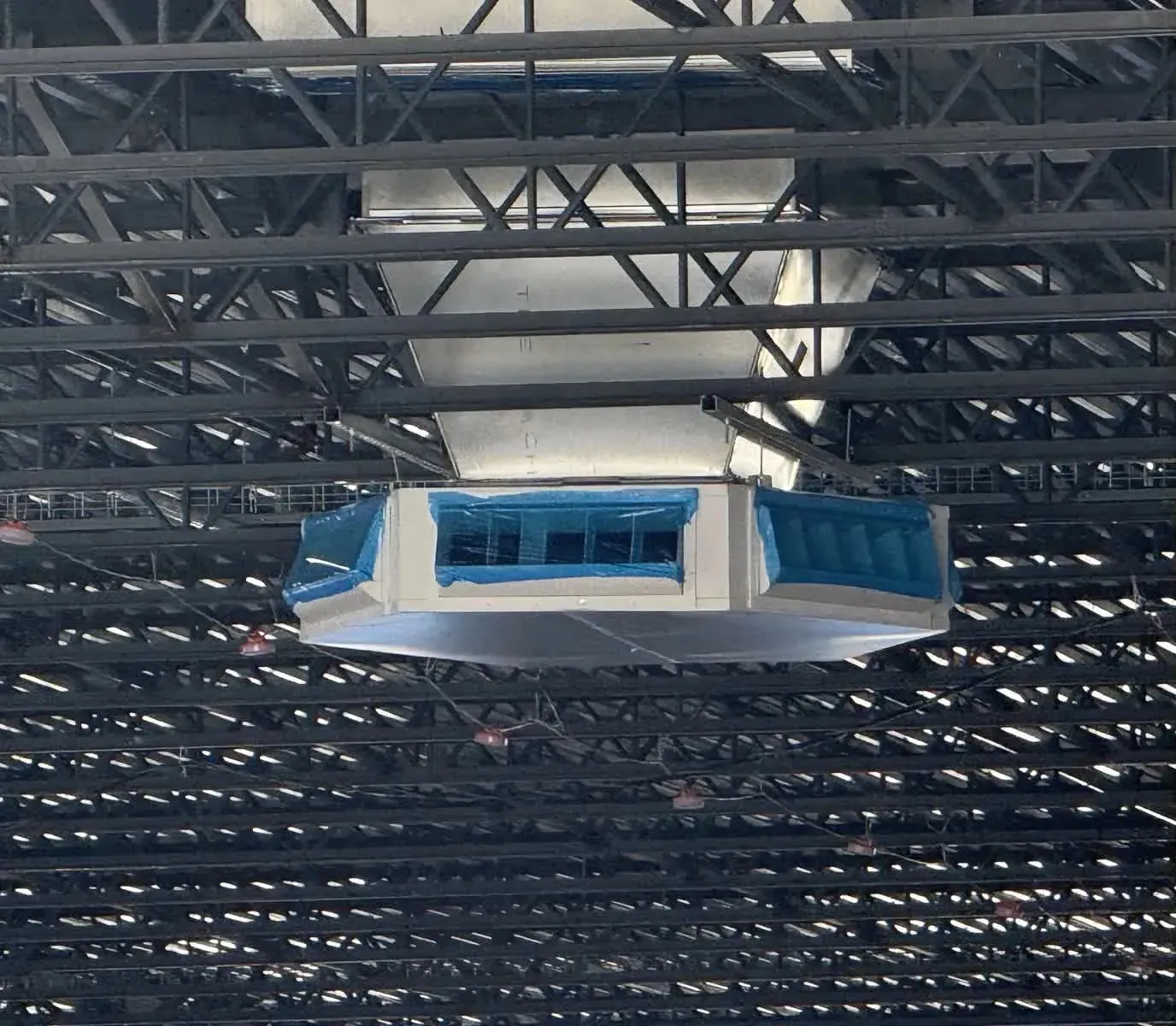
An inspector asks for the service history on a 900-pound chiller. You forward the request to whoever holds the maintenance contract, and what comes back is a stack of work orders. Dates, technician names, hours. Nothing that adds up to a leak rate.
Work orders are not compliance records, and the gap between them is where owners get caught. The obligation to hold those records is yours. It has been for years under one rule, and as of this January it applies to a great deal more of your equipment under a second one.
The obligation sits with the owner, not the contractor
EPA writes its refrigerant rules against the "owner or operator" of an appliance. Technicians have their own certification requirements, and they do the physical work, but the duty to calculate leak rates, hold the records and produce them on request is not something a service agreement transfers away by default.
This surprises people, because every practical step happens in someone else's hands. Your contractor adds the refrigerant. Your contractor runs the verification test. If your agreement does not say who assembles that into a record and where it lives, the answer is that nobody does, and the exposure is yours.
It is worth reading your current agreement specifically for this. Not "does it include maintenance", but: does it name refrigerant recordkeeping as a deliverable, does it say what format, and does it say the records are yours to keep when the agreement ends.
What changed on 1 January 2026
Two rules now run in parallel, and they cover different refrigerants at different thresholds. This is the part most owners have not caught up with.
| Section 608 | ER&R rule (AIM Act) | |
|---|---|---|
| Refrigerants | Ozone-depleting (R-22 and similar) | HFCs and substitutes, GWP above 53 |
| Charge size threshold | 50 pounds or more | 15 pounds or more |
| In effect since | Long-standing | 1 January 2026 |
| Regulation | 40 CFR part 82, subpart F | 40 CFR part 84, subpart C |
The threshold is the headline. An R-410A rooftop unit with a 40-pound charge was outside the leak repair rules entirely. It is inside them now. Across a portfolio of any size, that moves a large number of units from "not our problem" to "records required", and none of them announced themselves.
There was no phase-in. The requirements applied on the first of January.
If you want to know your own exposure, the question to answer is not how many chillers you have. It is how many appliances across the portfolio hold 15 pounds or more of HFC refrigerant. For most owners that number is considerably larger than the one they have been managing to.
Automatic leak detection on the largest systems
Appliances holding 1,500 pounds or more of HFC refrigerant also need an automatic leak detection system. Installed on or after 1 January 2026, ALD is required from installation. Installed between 1 January 2017 and 1 January 2026, the deadline is 1 January 2027.
That second date is the one to diarise. It is a procurement and installation job on your largest and least accessible equipment, and it is roughly a quarter away as this is written. ALD calibration records form part of the documentation, so the system is not installed and forgotten. Below 1,500 pounds there is no ALD requirement, though periodic leak inspections still apply.
What actually triggers action
A leak alone does not start a clock. Exceeding the annual leak rate for that class of equipment does. The thresholds are the same under both rules:
- Comfort cooling: 10%
- Commercial refrigeration: 20%
- Industrial process refrigeration: 30%
The leak rate is calculated over a 12-month period, which is why the records matter as much as the repairs. Without a documented charge history you cannot calculate a rate, and if you cannot calculate a rate you cannot show you were below the threshold.
Once a threshold is exceeded:
- The leak must be repaired within 30 days of discovery. That extends to 120 days where an industrial process shutdown is needed.
- An initial verification test must be done within that same window.
- A follow-up verification test must be completed within 10 days of the initial test passing, or of the appliance returning to normal operating conditions.
- If the repairs do not work, a retrofit or retirement plan is required within 30 days, and it has to be completed within one year.
That last one is the expensive path, and it is the reason this belongs in a capital conversation rather than a maintenance one. A chronically leaking appliance can turn into a mandatory replacement on a regulatory timeline rather than yours. If a unit is already near the end of its useful life, a leak rate climbing toward the threshold is a signal worth acting on in the capital plan before the rule decides the date for you.
What a complete record looks like
For each appliance at or above the threshold, you should be able to produce:
- Full charge of the appliance, and the basis for that figure
- Every refrigerant addition: date, quantity, refrigerant type, and the technician's certification number
- Every recovery: quantity removed and where it went for reclamation or destruction
- Leak rate calculations, with the working
- Leak inspection dates and outcomes
- Repair records, and both verification tests
- Any retrofit or retirement plan
- ALD installation and calibration records, where applicable
Records must be kept for at least three years and produced to EPA on request.
Two practical notes. Records held only in a contractor's field service system are still your records, and you should be able to get them out — ideally on a schedule, not on demand during an inspection. And the unit of organisation is the appliance, not the building or the work order. If your documentation is filed by invoice, assembling a leak rate for one chiller means reconstructing it from paperwork that was never arranged to answer that question.
Where to start
If you have not looked at this since the January change, five questions will tell you where you stand:
- How many appliances across the portfolio hold 15 pounds or more of HFC refrigerant? Does a list exist at all?
- Is the full charge recorded for each of them?
- For any appliance that has had refrigerant added in the last 12 months, can you produce a leak rate?
- Does any appliance hold 1,500 pounds or more, and is it on a path to ALD before 1 January 2027?
- Does your service agreement name refrigerant recordkeeping as a deliverable, in a format you can hold and keep?
Most owners find the first question is the hard one. An equipment list with charge sizes is the foundation for everything else here, and it is also the thing that makes a capital plan defensible for entirely separate reasons.
This is a summary written for owners, not legal advice. The authority is the regulation itself at 40 CFR parts 82 and 84, and where a specific appliance sits is worth confirming against it.
We have written separately about what a mechanical service agreement should actually include, and about the A2L refrigerant transition, which is the other half of the refrigerant picture on your capital plan.