
Planning RTU Replacement Across a Portfolio Without Guessing
Rooftop units rarely fail on a convenient schedule. Here's how institutional owners build a replacement plan from asset data rather than reacting to breakdowns.
· 2 min read · Silver Spur Mechanical
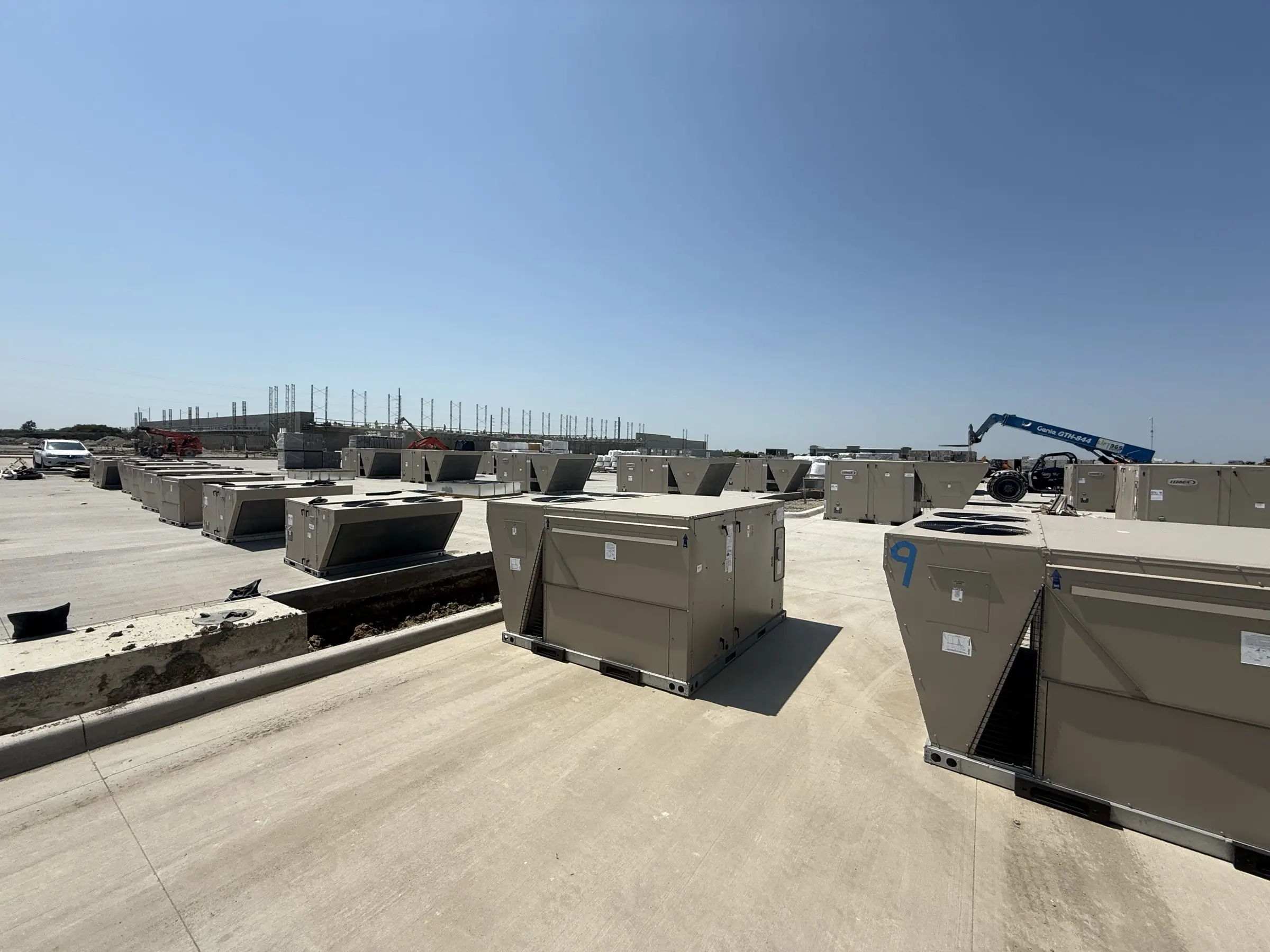
Most rooftop units don't announce their retirement. They degrade quietly — a compressor drawing more amps each season, a coil losing capacity, a control board replaced twice in eighteen months — until a July afternoon when a tenant calls and the answer is a five-figure emergency.
For an owner with one building, that's an inconvenience. Across a portfolio of forty, it's a budgeting problem that quietly compounds.
Start with what you actually own
Most portfolios we assess have never had a complete mechanical inventory. Property managers know the units that cause trouble. Nobody has a list of every unit, its age, its tonnage, and its condition.
That list is the foundation of everything else. For each unit you want:
- Make, model and serial — serial numbers date the equipment even when records are gone
- Tonnage and configuration — gas/electric, heat pump, economiser presence
- Observed condition — coil integrity, cabinet corrosion, compressor and fan condition
- Service history — repeat repairs are the clearest signal a unit is near end of life
- Refrigerant type — R-22 equipment carries a different risk profile entirely
Once that exists, replacement planning becomes arithmetic rather than instinct.
Age is a starting point, not an answer
Packaged rooftop equipment typically runs fifteen to twenty years. But a unit on a Houston warehouse roof running long hours is not the same asset as an identical unit on a Dallas office serving a nine-to-five load.
What matters more than nameplate age:
- Repair frequency and cost. Once annual repair spend approaches a quarter of replacement cost, you're financing someone else's capital plan.
- Refrigerant exposure. R-22 has been phased out of production. Servicing those units means reclaimed refrigerant at unpredictable prices.
- Efficiency gap. A twenty-year-old unit against a current high-efficiency model is a real operating-cost difference, and often the piece of the analysis that gets ignored.
Group work into phases, not emergencies
The most expensive way to replace rooftop units is one at a time, in August, under pressure.
Grouping replacements by building, by roof, or by season lets you consolidate crane and rigging costs, order equipment ahead of lead times, and schedule cutovers around tenant operations instead of around failures. On larger programmes we've phased hundreds of units across multiple properties this way, which is only possible when the sequencing is decided months ahead.
Build the documentation as you go
Institutional ownership eventually needs to answer questions from lenders, buyers or investment committees about deferred maintenance. A replacement programme that produces permit records, commissioning reports and per-asset documentation as a by-product is worth considerably more than one that produces only invoices.
That documentation is also what makes the next assessment cheap. The second cycle of capital planning should never start from zero.
What good looks like
An owner with a working plan can answer three questions at any moment: what do we own, what's likely to need replacing in the next thirty-six months, and what will it cost. Very few portfolios can answer all three today.
Getting there isn't complicated. It requires walking the roofs, recording what's up there honestly, and treating mechanical equipment as an asset class with a lifecycle rather than a line item that occasionally misbehaves.